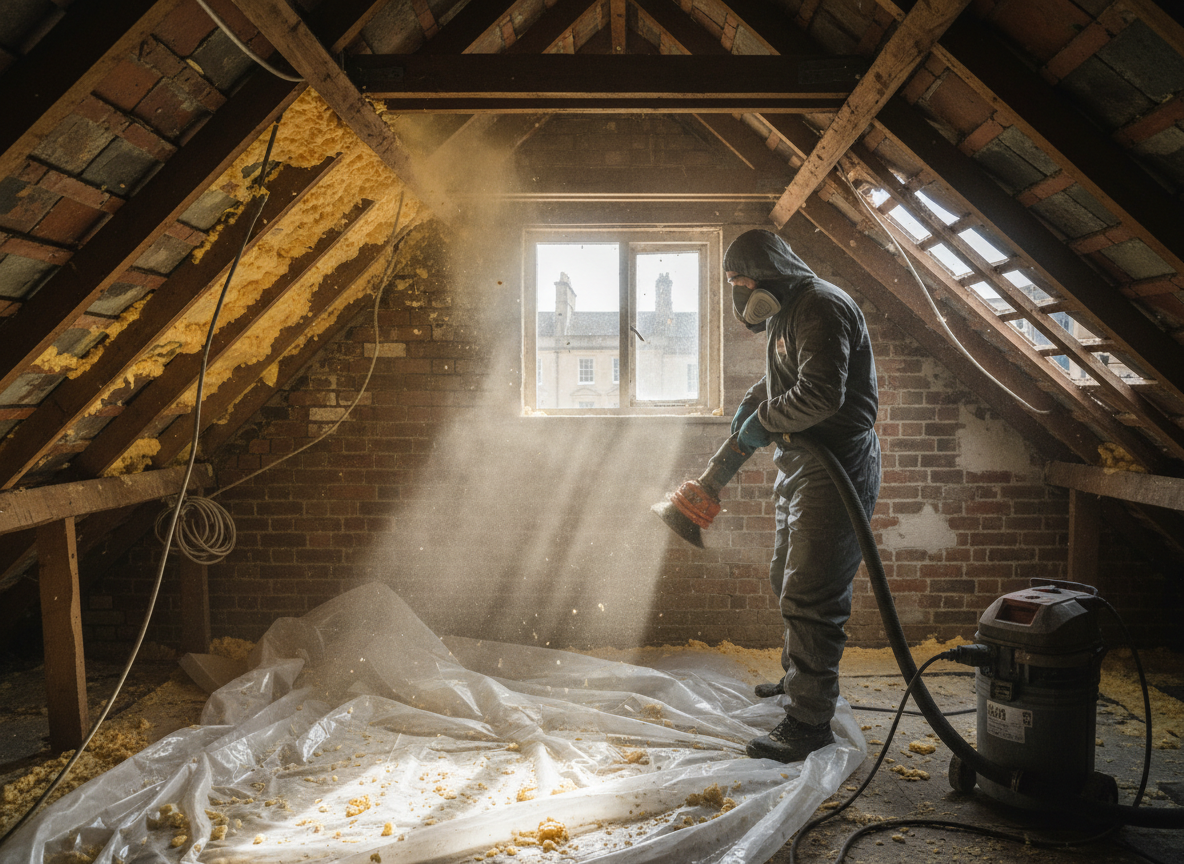
Attic spray foam removal in Bath requires careful handling because many properties date from the Georgian and Victorian eras with narrow roof voids and solid stone walls. Foam often bonds directly to lath and plaster or exposed rafters, and the mild but persistently damp climate around the Avon valley means trapped moisture can make separation slower and messier than in drier regions. Technicians must work from the Compass Court base with equipment sized for the tight access typical of Circus Mews and nearby terraces, where even small spills can affect ceilings below.
Edge cases appear regularly in the Bath area when foam has been applied over original insulation or has migrated into eaves that open into chimney stacks. Removal crews check for hidden timber decay caused by the region’s frequent rainfall before any cutting begins, and all waste is bagged on site to prevent loose particles drifting through the narrow streets. Local building practices mean some attics still contain original lime pointing that must stay undisturbed during extraction.
Regulation compliance centres on safe disposal of polyurethane waste and ensuring ventilation is restored once the foam is gone. In Bath properties this often involves reinstating breathable membranes to manage the condensation that builds up under the city’s slate roofs during winter. Homeowners are advised to inspect for any remaining residue that could affect future loft boarding or insulation upgrades.
Technician insight
In Bath, the thing that catches most people out with Attic spray foam removal is how tightly the foam bonds to the original stone and lime in Georgian roofs around the Circus, especially after years of Somerset rain driving moisture into the voids.
Foam Removal in a Circus Mews Townhouse
Homeowner reported musty smells in the top floor of a stone terrace near our Compass Court base. We found foam had been sprayed over existing lath and had trapped damp against the rafters. Extraction was done section by section with full containment to protect the ceilings below. Once cleared, the attic dried out and ventilation was restored without disturbing the original stonework.
How it works
- 1
Site Assessment
Survey the attic void, note access points and any stone or timber features typical of Bath properties.
- 2
Containment Setup
Protect ceilings and stairwells with sheeting suited to narrow Georgian terraces.
- 3
Foam Extraction
Cut and peel foam in sections, bagging waste immediately to control dust.
- 4
Final Clean and Ventilation Check
Remove residue, verify airflow and confirm the space is ready for new use.
Pricing
Cost depends on attic size, access difficulty and whether hidden timber or moisture issues are present in Bath homes.