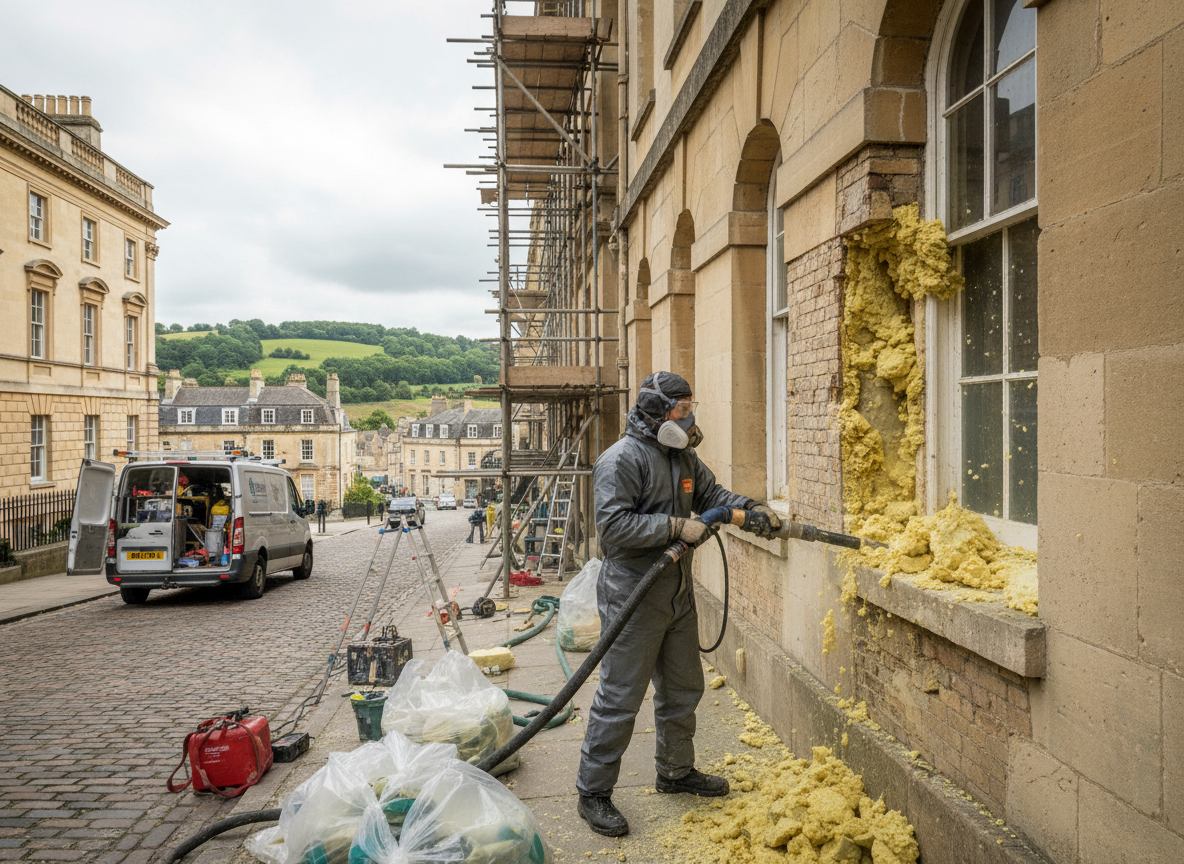
Bath's Georgian and Victorian terraces often feature cavity walls that were later filled with spray foam, trapping moisture against the local limestone. Once winter temperatures drop and rain increases, this leads to damp patches, reduced insulation performance, and timber decay inside the walls. Removal requires careful cutting and extraction to avoid damaging the original stonework or internal lath and plaster finishes that are typical in BA1 and BA2 postcodes.
The work begins with borescope inspection through existing vents or small test holes to map foam depth and any bridging to the outer leaf. Technicians then use low-pressure tools to break down and vacuum the foam without disturbing the wall ties or introducing new water paths. In properties near the River Avon or on sloping sites in areas like Widcombe and Lyncombe, extra attention goes to drainage around the base of the walls to prevent re-saturation after the foam is gone.
After extraction, cavities are left clear for natural ventilation or, where appropriate, re-insulated with breathable materials suited to Bath's climate. Homeowners should expect some internal access points and a final clean that removes dust from floors and skirtings. Leaving foam in place risks ongoing condensation problems that are hard to spot until significant damage has occurred.
Technician insight
In Bath, the thing that catches most people out with Cavity wall spray foam removal is how quickly moisture builds up behind the foam in the winter months on north-facing stone elevations. Georgian terraces in the city centre often have narrow cavities and original weep holes that foam has blocked, so we always check drainage at the base before we finish.
Foam Removal in a Widcombe Terrace
Homeowner reported persistent damp on an internal wall after heavy rain. Inspection showed spray foam had bridged the cavity and blocked vents on a north-facing elevation. We extracted the foam through small access points, cleared debris from the base, and confirmed improved airflow. The wall dried out over the following weeks with no further damp patches.
How it works
- 1
Site Assessment
Borescope survey of cavity condition and foam type through existing vents or small access holes.
- 2
Foam Extraction
Controlled breakdown and vacuum removal of spray foam while protecting stone, ties, and internal finishes.
- 3
Cavity Clearing
Removal of residue and checks for bridging or debris that could affect future ventilation.
- 4
Final Inspection
Verification that the cavity is clear and any moisture paths have been addressed before handover.
Pricing
Cost depends on property age, wall height, and access; contact us for a site visit and upfront quote.