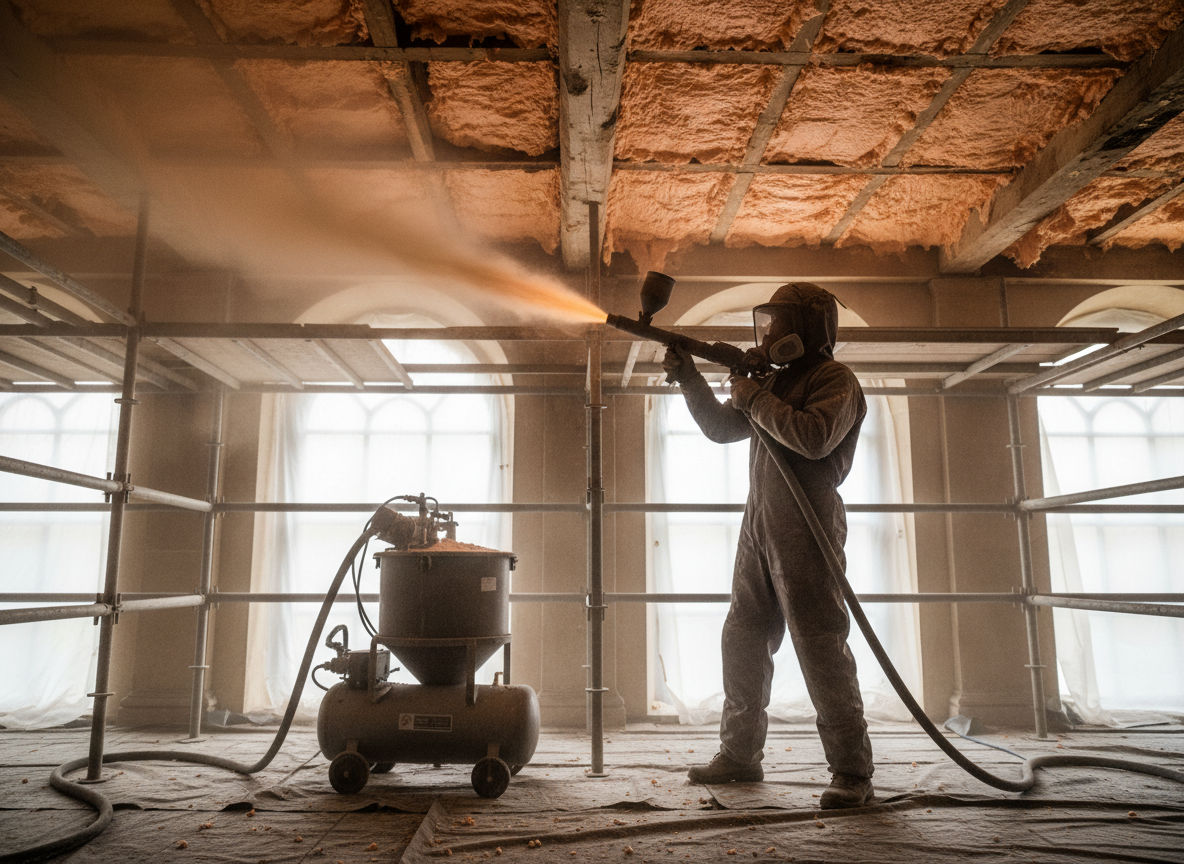
Sand blasting spray foam insulation removal requires careful control of media type and pressure to avoid damaging underlying substrates in Bath's older stone and timber buildings. Many properties in the city centre and surrounds feature lath and plaster or exposed stone where aggressive blasting can erode mortar joints or create new pathways for damp. Operators must contain dust tightly because narrow streets and shared walls in places like Circus Mews allow particles to migrate between properties quickly.
Edge cases in the Bath area often involve multi-layer foam installations applied over existing insulation or in roof voids with limited headroom. Sand blasting here demands sequential passes with progressively finer media to prevent overheating of timber joists, which can occur when work continues through warm summer days. Disposal routes must account for the volume of waste generated and the need to remove it from restricted parking zones around the city without leaving residue on cobbled surfaces.
Homeowners sometimes attempt DIY removal before calling specialists, leaving partial foam that then requires extra passes during professional sand blasting. In listed Georgian terraces common throughout Bath, any visible surface change after blasting can trigger additional scrutiny, so containment sheeting and negative air pressure are set up before work begins. Post-blast inspection focuses on hidden pockets behind rafters where foam tends to remain, especially after winter moisture has caused some material to harden unevenly.
Technician insight
In Bath, the thing that catches most people out with sand blasting spray foam insulation removal is how quickly dust travels through the porous stone walls of Georgian buildings, especially around Circus Mews where shared boundaries and narrow access make full containment essential before the first pass.
Roof Void in Central Bath Terrace
Homeowner discovered spray foam had trapped moisture against rafters. Inspection showed multiple layers applied over older insulation. Sand blasting cleared the foam in controlled passes while protecting adjacent stonework. Voids were left clean with no residue left in the mews access route.
How it works
- 1
Site Assessment
Inspect foam depth, substrate condition and access routes through Bath properties, noting any shared walls or restricted parking near Circus Mews.
- 2
Containment Setup
Install dust barriers and negative air units to prevent migration through stone walls typical of the area.
- 3
Sand Blasting Removal
Apply controlled media passes to strip foam without damaging historic surfaces or timber.
- 4
Cleanup and Disposal
Vacuum all residue and remove waste from site, leaving the void ready for reinsulation.
Pricing
Pricing varies with property age, foam thickness and access constraints common in Bath's older housing stock.