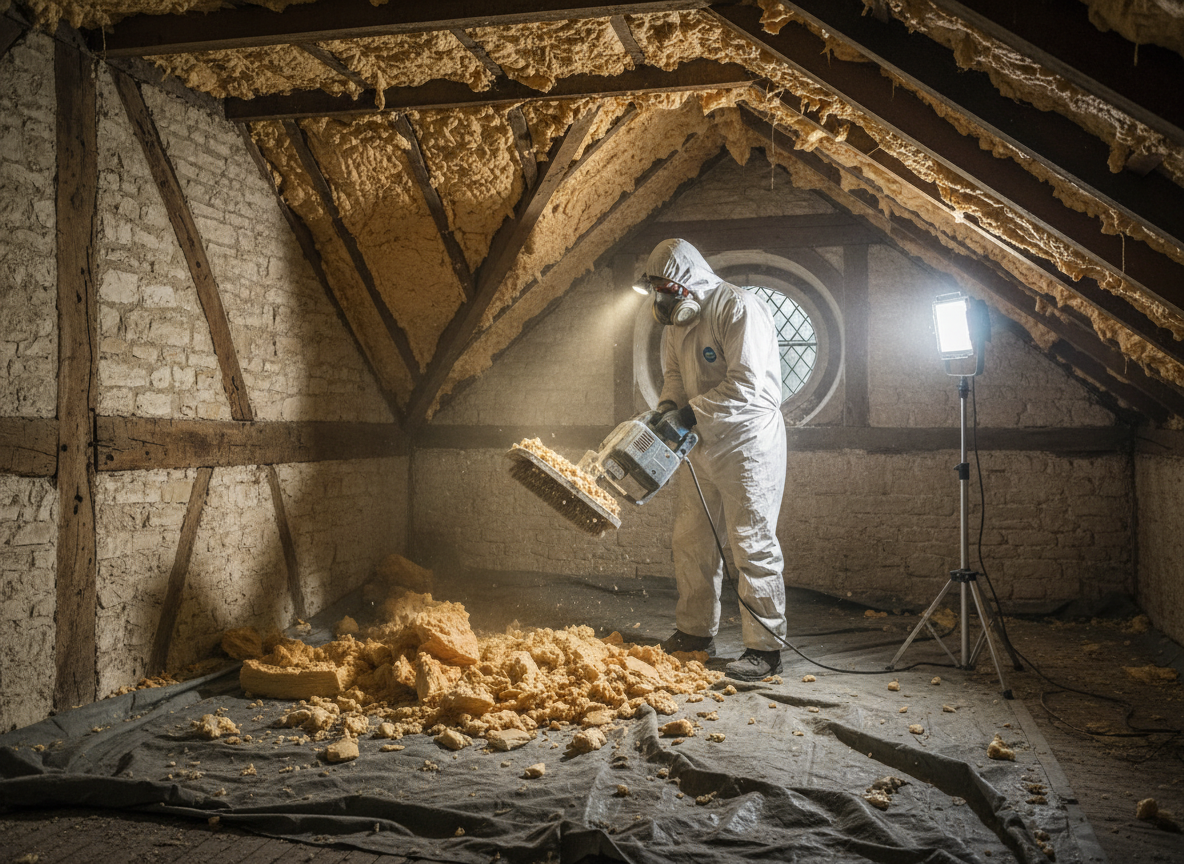
Bath's housing stock includes many Georgian and Victorian terraces where spray foam was applied directly to roof voids or under floors in the 2000s. Removing it requires separating the foam from original timber joists and lath without cracking historic plaster ceilings below. Damp winters in the Somerset valleys mean any residual foam left behind can trap moisture against stone walls, leading to rot that only shows months later.
The removal process starts with isolating the work area using dust barriers because the foam breaks into fine particles that settle on every surface. In narrow Bath mews properties like those near Circus Mews, access is often limited to internal hatches, so technicians must cut the foam into manageable sections rather than pulling large sheets. Older properties frequently have mixed insulation layers, so crews check for hidden mineral wool or polystyrene boards that were installed before the foam.
After extraction, the void must be ventilated and inspected for staining on rafters caused by previous condensation. Homeowners in the Bath area sometimes attempt DIY removal using rented tools, but this leaves thin foam layers stuck to joists that later attract mould when autumn rains raise indoor humidity. Professional crews use negative-pressure extraction units to pull debris straight into sealed bags before it circulates through the house.
Somerset properties on sloping sites often have uneven roof pitches, which changes how foam was originally sprayed and how it must now be removed in stages from the ridge down. Leaving any backing paper or mesh in place creates a barrier that prevents the roof from breathing, so complete removal includes checking the underside of tiles for remaining adhesive.
Technician insight
In Bath, the thing that catches most people out with spray foam insulation removal is how the foam bonds to the underside of original Bath stone tiles on older roofs. Once winter rain soaks the tiles, the foam pulls away unevenly and leaves thin residue that traps moisture against the rafters for years.
Georgian Terrace Roof Void
A homeowner in a Circus Mews terrace found the spray foam in the roof void was causing musty smells after heavy autumn rain. Inspection showed the foam had been sprayed over the original lath, trapping condensation against the timber. We sectioned and extracted the foam through the existing hatch, vacuumed residue from the joists, and left the void ventilated. The property now breathes properly with no further damp issues reported.
How it works
- 1
Initial Inspection
We visit the property in Bath to assess foam depth, access points, and any interaction with original timber or stone.
- 2
Containment Setup
Dust barriers and negative-pressure units are installed to keep particles from spreading through the house.
- 3
Foam Extraction
Foam is cut into sections and removed using specialist tools suited to the tight roof voids common in Georgian terraces.
- 4
Void Cleaning And Ventilation
Remaining debris is vacuumed and the space is ventilated to check for hidden damp before handover.
Pricing
Cost depends on access difficulty, foam thickness, and property layout; we provide a clear quote after inspection.