2026-10-22 ·
Spray Foam Removal and Listed Building Rules in Bath
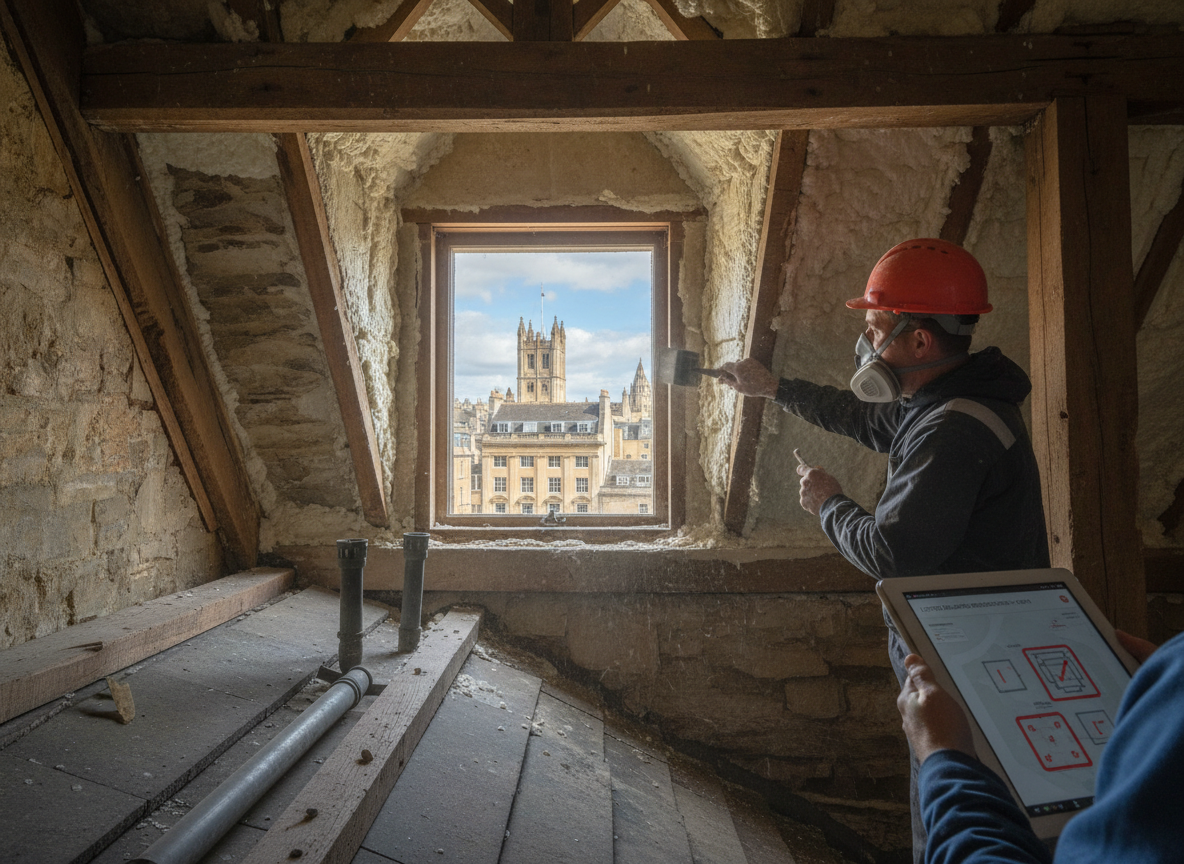
In Bath, spray foam removal from listed buildings requires listed building consent from Bath and North East Somerset Council, typically taking 8–16 weeks for approval depending on the property's grade and scope of works. This applies across central Bath neighborhoods such as the Circus, Royal Crescent, and Lansdown, where many Grade I and II* properties feature original timber joists and stone walls that cannot be altered without oversight. Owners must demonstrate that removal methods will not damage historic fabric, and applications often need detailed drawings and method statements prepared by specialists familiar with local building traditions.
Listed Building Consent Process in Bath
Bath and North East Somerset Council reviews every application for works to listed buildings with particular attention to preserving original construction details. Applications must include photographs, structural surveys, and specifications showing how spray foam will be extracted without harming lime plaster, oak beams, or Bath stone. The council frequently consults Historic England on Grade I properties, which extends timelines. Residents in areas like Widcombe or Walcot commonly face requests for additional information on ventilation restoration after removal, because many 18th-century buildings rely on breathable materials that closed-cell foam disrupts. Submitting incomplete documentation is the most common reason for refusal or delay in the Bath area.
Specific Challenges in Georgian and Victorian Housing Stock
Bath's predominant housing stock consists of Georgian townhouses and terraces built between 1720 and 1840 using local limestone and timber. Spray foam installed in lofts or between rafters often traps moisture against these materials, leading to rot in joist ends and ceiling damage that becomes visible during removal. In properties around Queen Square or the Paragon, narrow roof voids and limited access points require careful planning to avoid disturbing original leadwork or decorative cornices. Victorian additions in lower Lansdown present similar issues where later extensions meet older stone walls. Removal crews must work around these constraints without power tools that could crack fragile masonry, and waste must be bagged on site to prevent dust settling on protected interiors.
Assessment Steps Before Starting Work
A thorough insulation assessment identifies the foam type, depth, and any hidden damage before consent applications are prepared. Surveyors check for timber decay, measure moisture levels in joists, and photograph every elevation and internal detail required by the council. In Bath's hillside locations such as Lyncombe and Bear Flat, drainage patterns around foundations also factor into assessments because poor runoff can worsen damp once foam is gone. Reports from these assessments form the core evidence submitted with consent forms and help owners understand whether full removal or targeted sections are necessary to satisfy heritage officers.
Suitable Removal Techniques for Protected Structures
Dry ice blasting and manual scraping are the methods most often accepted for listed buildings because they minimise vibration and dust. These techniques allow crews to work section by section, inspecting each rafter and wall plate as foam is cleared. In Bath properties, teams frequently combine these with gentle thermal methods to soften closed-cell foam without overheating historic timber. After removal, ventilation upgrades using traditional materials such as sheep's wool or wood fibre are commonly specified to restore breathability. Owners in surrounding villages like Batheaston or Bathford follow the same consent route when their homes fall within conservation areas linked to the World Heritage Site.
Timing and Coordination with Council Requirements
Work cannot begin until written consent is received, and conditions attached to approvals often dictate the exact sequence of removal and reinstatement. Many approvals issued for Bath properties require that all waste is removed from site daily and that protective sheeting remains in place throughout the project. Linking removal timing with the drier months helps because Bath receives steady rainfall that can complicate external access on steep streets. Readers planning projects can review the Cost Guide for Spray Foam Removal Bath and the article on signs of damp after spray foam installation in Somerset for further local context on what to expect once consent is granted.