2026-10-22 ·
Spray Foam Removal Challenges in Bath's Georgian Homes
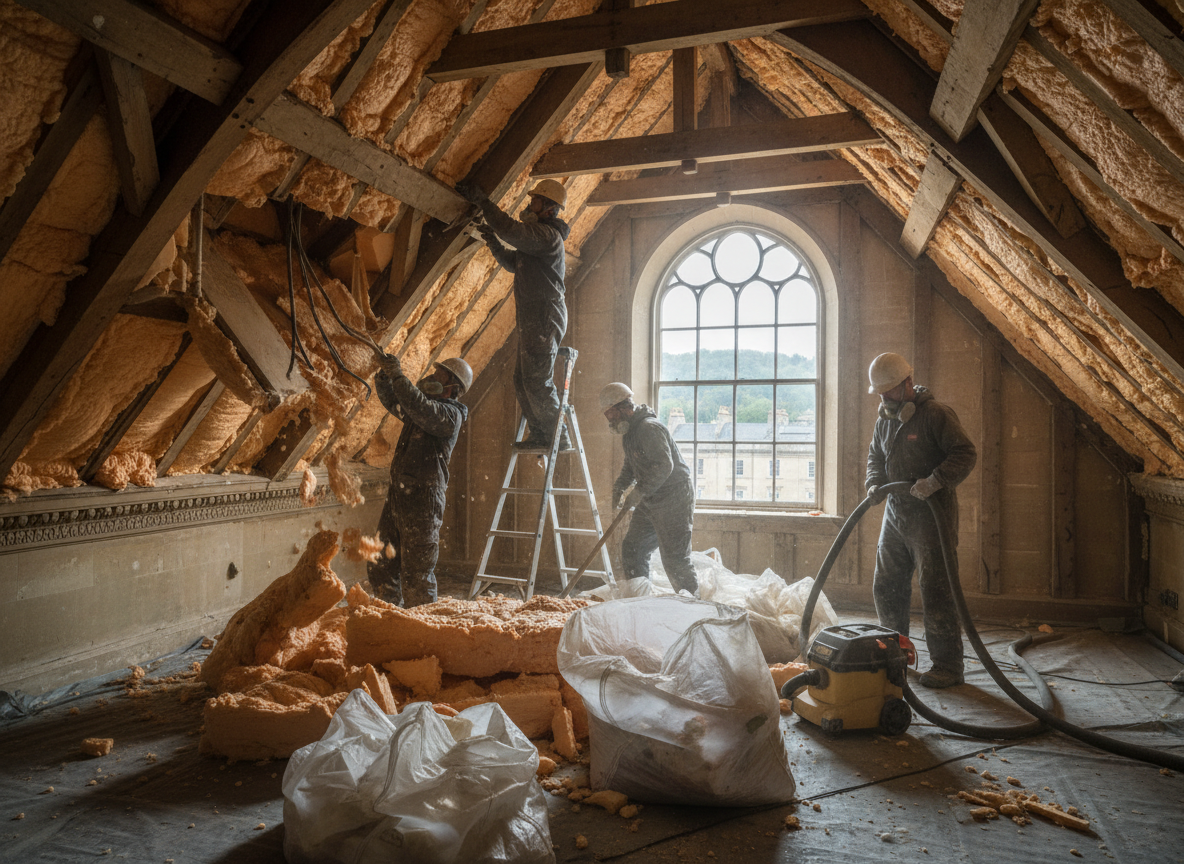
Spray foam removal in Bath's Georgian homes requires careful adaptation to 18th- and 19th-century stone construction, narrow roof voids, and high moisture retention common across the city centre and surrounding villages. These properties often feature thick limestone walls and timber roofs that trap condensation when closed-cell foam was previously applied, leading to rot that standard removal methods can worsen if not handled precisely.
Georgian Construction and Insulation Issues
Bath's Georgian terraces, such as those around the Circus and Royal Crescent, rely on solid masonry without cavities, so spray foam was frequently added to lofts or under rafters for insulation. This creates removal challenges because the foam bonds tightly to historic timbers and stone, risking damage during extraction. Workers must account for the age of lath and plaster ceilings below, which can crack under vibration. In neighborhoods like Widcombe and Bathwick, many homes retain original roof pitches that limit equipment access, forcing manual techniques over larger machinery. The dense stone also holds residual moisture longer than modern builds, so removal teams often need extended drying periods before re-insulation. These factors make each job site-specific rather than routine.
Moisture and Ventilation Problems
Georgian homes in the Bath area experience frequent damp winters that drive water into roof spaces, where spray foam can seal in moisture against timbers. Removal must include assessment of ventilation paths blocked by previous installations, especially in properties near the River Avon where ground humidity rises. Operators typically check for black mould growth on rafters and replace affected sections before proceeding. In lofts of homes built before 1850, foam often covers original eaves gaps, so reopening these during removal restores airflow and prevents future condensation. Local conditions mean crews monitor dew points closely, as sudden temperature drops can reintroduce moisture mid-project. This step-by-step approach avoids the cycle of repeated insulation failures seen in some restored properties.
Heritage Constraints on Removal Techniques
Many Georgian buildings fall under listed status, limiting aggressive removal methods that could alter original fabric. Spray Foam Removal and Listed Building Rules in Bath outlines the permissions often required before starting work in protected structures. Techniques such as dry ice blasting spray foam removal are preferred because they reduce vibration and dust compared to mechanical scraping. Teams also document every stage for conservation officers, particularly when working near decorative cornices or exposed beams. In areas like Lansdown and Combe Down, even minor changes to roof profiles need approval, extending project timelines. Careful selection of loft spray foam removal methods helps preserve the building's character while addressing insulation issues.
Timing and Weather Considerations in the Bath Area
Mild but persistently damp conditions in the Bath region make autumn and early spring the most practical windows for spray foam removal, allowing adequate drying time before colder months return. Best Time of Year for Spray Foam Removal in Bath explains how summer heat can soften foam for easier lift but increases dust control needs. Crews avoid mid-winter starts because frozen stone slows moisture evaporation after foam is gone. In exposed locations such as Beacon Hill, wind-driven rain can penetrate during open-roof phases, requiring temporary coverings. Planning around these patterns reduces callbacks and supports stable indoor environments once work finishes.